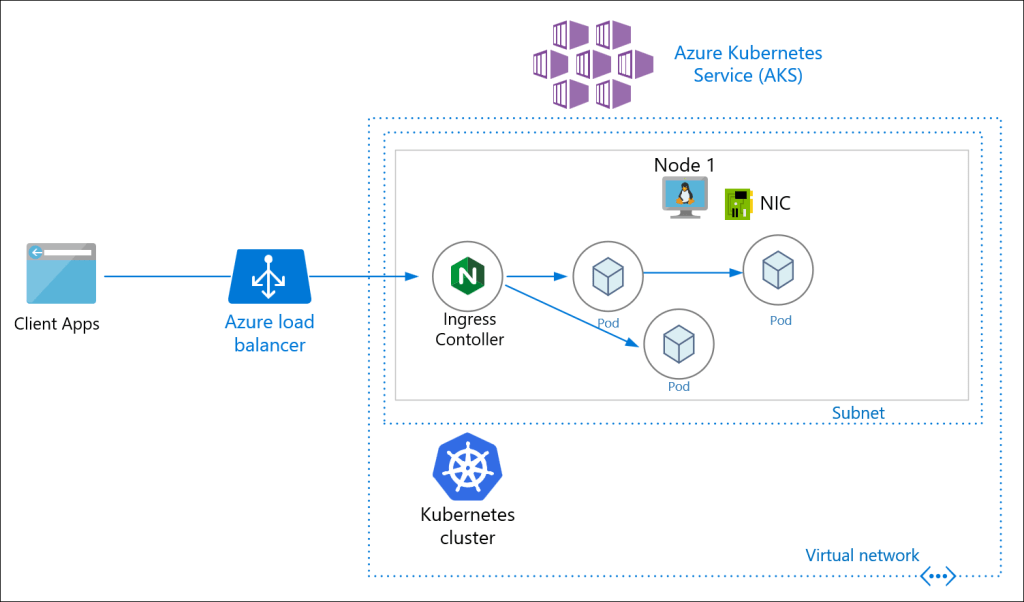

In this 1st configuration profile, I will walk through the resulting configuration of AKS and its effect on the Load Balancer, Virtual Network, VM network interface card, deploy and test a web application in the Azure Kubernetes Service (AKS) cluster. The configuration profile is mainly around the Kubenet network model. Kubenet is a very basic, simple network plugin, on Linux only. It does not, of itself, implement more advanced features like cross-node networking or network policy.

Please read the Part 1 intro of this blog series if you haven’t already. This will explain the background and what each configuration setting means.
Configuration Profile 1
- Network Model/Type: Basic (Kubenet)
- Http application routing: Disabled
- VM Scale Sets: Disabled
1 Node/VM
The following are screen shots to show the resulting configuration across its related azure resources.
AKS Resource – Networking Profile

AKS Infrastructure Resource Group
When this AKS resource is deployed, behind the…
View original post 488 more words

 El Bruno
Leave a comment